NASA’s Perseverance Rover Scientists Find Intriguing Mars Rock
### Featured [  ### NASA Explores Potential Commercial Servicing for Hubble Telescope ](https://science.nasa.gov/missions/hubble/nasa-explores-potential-commercial-servicing-for-hubble-telescope/)[  ### NASA-funded Study Details One of Oldest Mars Meteorites Ever Found ](https://www.nasa.gov/solar-system/planets/mars/nasa-funded-study-details-one-of-oldest-mars-meteorites-ever-found/)[  ### NASA’s Perseverance Offers Clues to Protect Crews From Mars Dust ](https://www.nasa.gov/missions/mars-2020-perseverance/nasas-perseverance-offers-clues-to-protect-crews-from-mars-dust/) ### Featured [ ### NASA’s TRACERS First Results Offers Peek into Violent Magnetic Process](https://science.nasa.gov/blogs/tracers/2026/10/29/nasas-tracers-first-results-offers-peek-into-violent-magnetic-process/) [  ### NASA’s Lucy Reaches Trojan Asteroid Region 5 Years After Launch ](https://science.nasa.gov/blogs/lucy/2026/10/28/nasas-lucy-reaches-trojan-asteroid-region-5-years-after-launch/)[  ### Sunshade for NASA’s NEO Surveyor Mission Ready for Its Day in Sun ](https://science.nasa.gov/blogs/neo-surveyor/2026/10/26/sunshade-for-nasas-neo-surveyor-mission-ready-for-its-day-in-sun/) ### Highlights [  ### NASA’s ISAM State of Play: The Industry Standard for Space Servicing, Assembly, and Manufacturing ](https://www.nasa.gov/humans-in-space/commercial-space/nasas-isam-state-of-play-the-industry-standard-for-space-servicing-assembly-and-manufacturing/)[  ### NASA’s Artemis III Mission to Test Future Moon Lander Operations ](https://www.nasa.gov/missions/artemis/nasas-artemis-iii-mission-to-test-future-moon-lander-operations/)[ ### NASA’s Simulated Mars Crew Marks One Year Inside Habitat](https://www.nasa.gov/humans-in-space/nasas-simulated-mars-crew-marks-one-year-inside-habitat/) ### Highlights [  ### Vega Island Frozen in Fright ](https://science.nasa.gov/earth/earth-observatory/vega-island-frozen-in-fright/)[  ### Arnab Strikes India ](https://science.nasa.gov/earth/earth-observatory/arnab-strikes-india/)[  ### The Land of the Standing-Up Rocks ](https://science.nasa.gov/earth/earth-observatory/the-land-of-the-standing-up-rocks/) ### Highlights [  ### November’s Night Sky Notes: Light-Day Away ](https://science.nasa.gov/solar-system/skywatching/night-sky-network/novembers-night-sky-notes-light-day-away/)[  ### Slice of Martian Meteorite Teghaza 001 ](https://science.nasa.gov/photojournal/slice-of-martian-meteorite-teghaza-001/)[  ### NASA-funded Study Details One of Oldest Mars Meteorites Ever Found ](https://www.nasa.gov/solar-system/planets/mars/nasa-funded-study-details-one-of-oldest-mars-meteorites-ever-found/) ### Highlights [  ### NASA Explores Potential Commercial Servicing for Hubble Telescope ](https://science.nasa.gov/missions/hubble/nasa-explores-potential-commercial-servicing-for-hubble-telescope/)[  ### Ghostly Cat’s Head Nebula Lurks Within Sight of NASA’s Hubble, Webb ](https://science.nasa.gov/missions/hubble/ghostly-cats-head-nebula-lurks-within-sight-of-nasas-hubble-webb/) # NASA’s Perseverance Rover Scientists Find Intriguing Mars Rock ## Contents 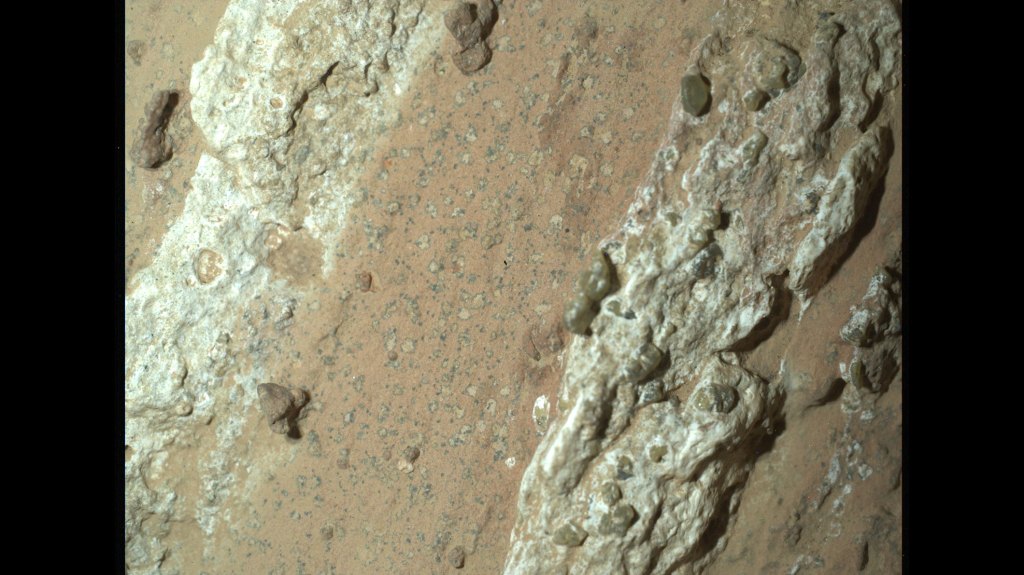 NASA’s Perseverance rover discovered “leopard spots” on a reddish rock nicknamed “Cheyava Falls” in Mars’ Jezero Crater in July 2024. Scientists think the spots may indicate that, billions of years ago, the chemical reactions in this rock could have supported microbial life; other explanations are being considered.  An annotated version of the image of “Cheyava Falls” indicates the markings akin to leopard spots, which have particularly captivated scientists, and the olivine in the rock. The image was captured by the WATSON instrument on NASA’s Perseverance Mars rover on July 18. _The six-wheeled geologist found a fascinating rock that has some indications it may have hosted microbial life billions of years ago, but further research is needed._ A vein-filled rock is catching the eye of the science team of NASA’s Perseverance rover. Nicknamed “Cheyava Falls” by the team, the arrowhead-shaped rock contains fascinating traits that may bear on the question of whether Mars was home to microscopic life in the distant past. Analysis by instruments aboard the rover indicates the rock possesses qualities that fit the definition of a possible indicator of ancient life. The rock exhibits chemical signatures and structures that could possibly have been formed by life billions of years ago when the area being explored by the rover contained running water. Other explanations for the observed features are being considered by the science team, and future research steps will be required to determine whether ancient life is a valid explanation. The rock _—_ the rover’s [22nd rock core sample](https://science.nasa.gov/mission/mars-2020-perseverance/mars-rock-samples/) _—_ was collected on July 21, as the rover explored the northern edge of Neretva Vallis, an ancient river valley measuring a quarter-mile (400 meters) wide that was carved by water rushing into Jezero Crater long ago. 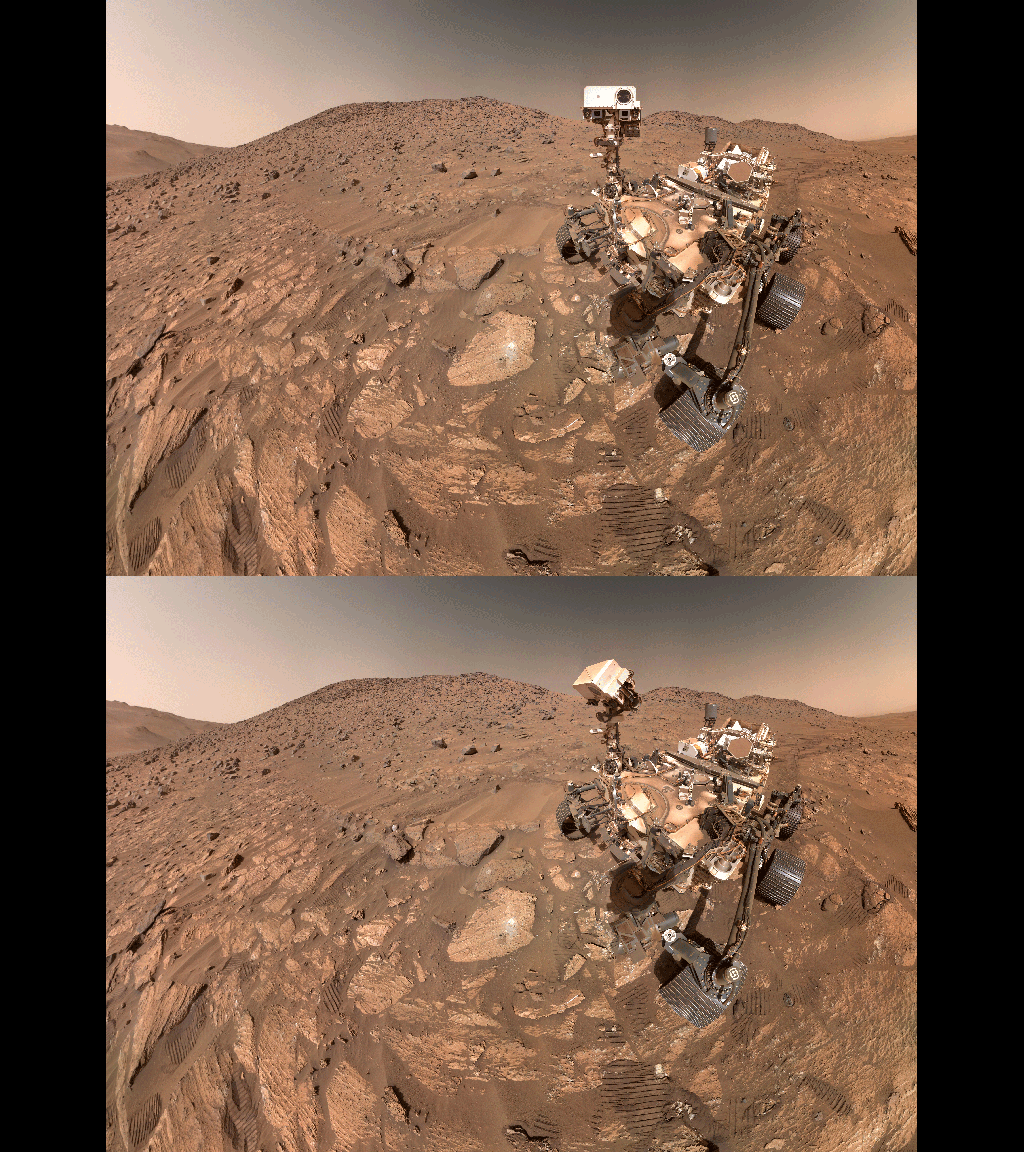 NASA’s Perseverance Mars rover took this selfie, made up of 62 individual images, on July 23. A rock nicknamed “Cheyava Falls,” which has features that may bear on the question of whether the Red Planet was long ago home to microscopic life, is to the left of the rover near the center of the image.  “Cheyava Falls” (left) shows the dark hole where NASA’s Perseverance took a core sample; the white patch is where the rover abraded the rock to investigate its composition. A rock nicknamed “Steamboat Mountain” (right) also shows an abrasion patch. This image was taken by Mastcam-Z on July 23. 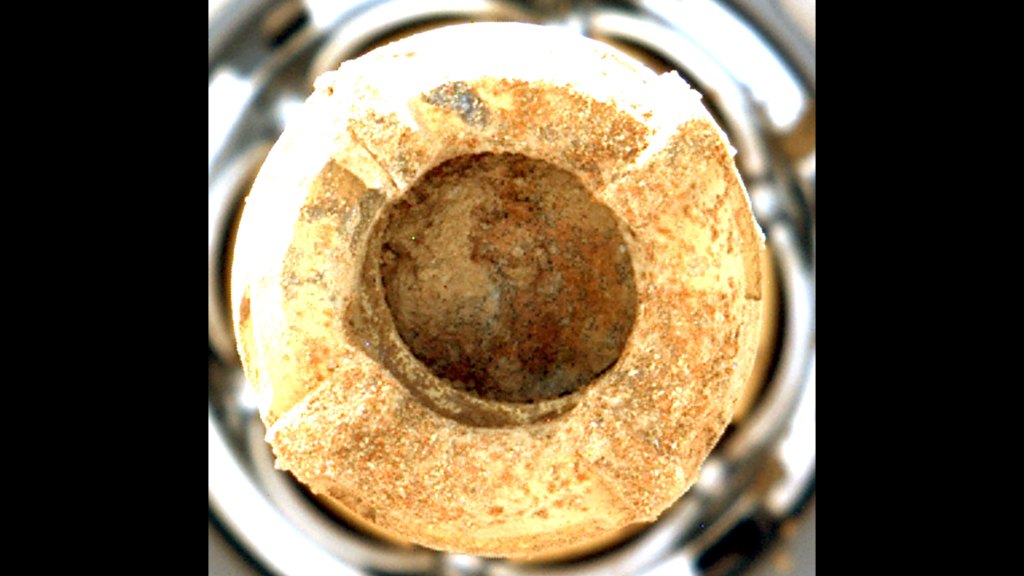 NASA’s Perseverance used its Mastcam-Z instrument to view the “Cheyava Falls” rock sample within the rover’s drill bit. Scientists believe markings on the rock contain fascinating traits that may bear on the question of whether Mars was home to microscopic life in the distant past. “We have designed the route for Perseverance to ensure that it goes to areas with the potential for interesting scientific samples,” said Nicola Fox, associate administrator, Science Mission Directorate at NASA Headquarters in Washington. “This trip through the Neretva Vallis riverbed paid off as we found something we’ve never seen before, which will give our scientists so much to study.” Multiple scans of Cheyava Falls by the rover’s [SHERLOC](https://www.nasa.gov/centers-and-facilities/jpl/the-detective-aboard-nasas-perseverance-rover/) (Scanning Habitable Environments with Raman & Luminescence for Organics & Chemicals) instrument indicate it contains organic compounds. While such carbon-based molecules are considered the building blocks of life, they also can be formed by non-biological processes. “Cheyava Falls is the most puzzling, complex, and potentially important rock yet investigated by Perseverance,” said Ken Farley, Perseverance project scientist of Caltech in Pasadena. “On the one hand, we have our first compelling detection of organic material, distinctive colorful spots indicative of chemical reactions that microbial life could use as an energy source, and clear evidence that water — necessary for life — once passed through the rock. On the other hand, we have been unable to determine exactly how the rock formed and to what extent nearby rocks may have heated Cheyava Falls and contributed to these features.” [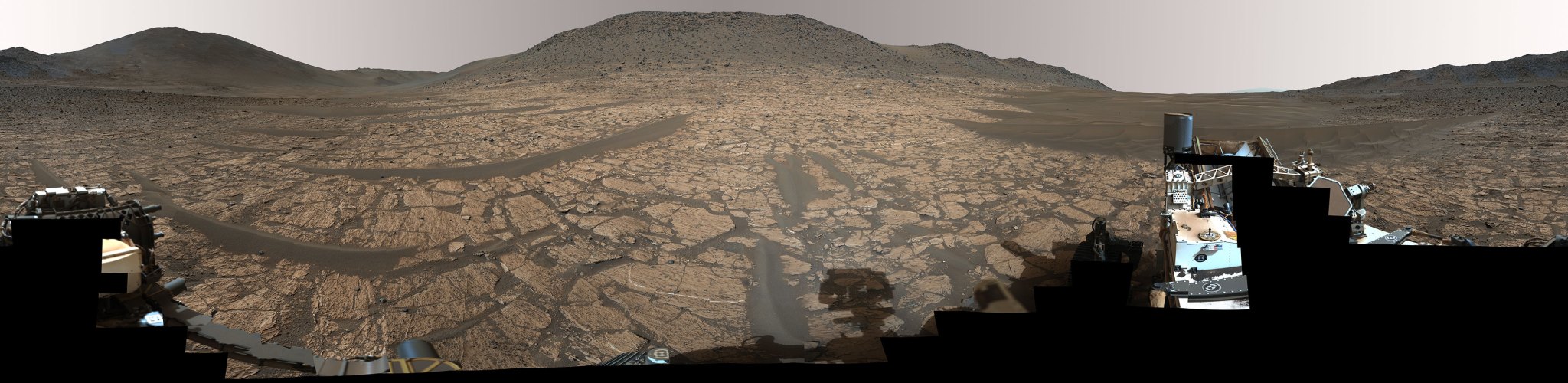](https://www.nasa.gov/wp-content/uploads/2024/07/e2-pia26369-perseverance-views-a-360-degree-4000wide.jpg) NASA’s Perseverance rover used its Mastcam-Z instrument to capture this 360-degree panorama of a region on Mars called “Bright Angel,” where an ancient river flowed billions of years ago. “Cheyava Falls” was discovered in the area slightly right of center, about 361 feet (110 meters) from the rover. NASA/JPL-Caltech/ASU/MSSS Other details about the rock, which measures 3.2 feet by 2 feet (1 meter by 0.6 meters) and was named after a Grand Canyon waterfall, have intrigued the team, as well. ### How Rocks Get Their Spots In its search for signs of ancient microbial life, the Perseverance mission has focused on rocks that may have been created or modified long ago by the presence of water. That’s why the team homed in on Cheyava Falls. “This is the kind of key observation that SHERLOC was built for — to seek organic matter as it is an essential component of a search for past life,” said SHERLOC’s principal investigator Kevin Hand of NASA’s Jet Propulsion Laboratory in Southern California, which manages the mission. Running the length of the rock are large white calcium sulfate veins. Between those veins are bands of material whose reddish color suggests the presence of hematite, one of the minerals that gives Mars its distinctive rusty hue. When Perseverance took a closer look at these red regions, it found dozens of irregularly shaped, millimeter-size off-white splotches, each ringed with black material, akin to leopard spots. Perseverance’s [PIXL](https://www.jpl.nasa.gov/news/heres-how-ai-is-changing-nasas-mars-rover-science) (Planetary Instrument for X-ray Lithochemistry) instrument has determined these black halos contain both iron and phosphate. [](https://www.nasa.gov/wp-content/uploads/2024/07/e3-astriobio-cold-scale-11-5x8-1.png) As shown in this graphic, astrobiologists catalog a seven-step scale, called the CoLD (Confidence of Life Detection) scale, to research whether a sample could indicate life. This “Cheyava Falls” sample is an example of Step One: “Detect possible signal.” Much additional research must be conducted to learn more. “These spots are a big surprise,” said David Flannery, an astrobiologist and member of the Perseverance science team from the Queensland University of Technology in Australia. “On Earth, these types of features in rocks are often associated with the fossilized record of microbes living in the subsurface.” Spotting of this type on sedimentary terrestrial rocks can occur when chemical reactions involving hematite turn the rock from red to white. Those reactions can also release iron and phosphate, possibly causing the black halos to form. Reactions of this type can be an energy source for microbes, explaining the association between such features and microbes in a terrestrial setting. In one scenario the Perseverance science team is considering, Cheyava Falls was initially deposited as mud with organic compounds mixed in that eventually cemented into rock. Later, a second episode of fluid flow penetrated fissures in the rock, enabling mineral deposits that created the large white calcium sulfate veins seen today and resulting in the spots. NASA’s Perseverance rover has made very compelling observations in a Martian rock that, with further study, could prove that life was present on Mars in the distant past — but how can we determine that from a rock, and what do we need to do to confirm it? Morgan Cable, a scientist on the Perseverance team, takes a closer look. Credit: NASA/JPL-Caltech ### Another Puzzle Piece While both the organic matter and the leopard spots are of great interest, they aren’t the only aspects of the Cheyava Falls rock confounding the science team. They were surprised to find that these veins are filled with millimeter-size crystals of olivine, a mineral that forms from magma. The olivine might be related to rocks that were formed farther up the rim of the river valley and that may have been produced by crystallization of magma. If so, the team has another question to answer: Could the olivine and sulfate have been introduced to the rock at uninhabitably high temperatures, creating an abiotic chemical reaction that resulted in the leopard spots? “We have zapped that rock with lasers and X-rays and imaged it literally day and night from just about every angle imaginable,” said Farley. “Scientifically, Perseverance has nothing more to give. To fully understand what really happened in that Martian river valley at Jezero Crater billions of years ago, we’d want to bring the Cheyava Falls sample back to Earth, so it can be studied with the powerful instruments available in laboratories.” A key objective of Perseverance’s mission on Mars is [astrobiology](https://astrobiology.nasa.gov/), including caching samples that may contain signs of ancient microbial life. The rover will characterize the planet’s geology and past climate, to help pave the way for human exploration of the Red Planet and as the first mission to collect and cache Martian rock and regolith.